
Sustainability Through the Ages
Explore Intel's journey through time, discovering how our commitment to innovation has shaped a more sustainable future for technology and our planet.
Explore Intel's journey through time, discovering how our commitment to innovation has shaped a more sustainable future for technology and our planet.
Hover over cards and scroll to view timeline! Use your scroll wheel for an easier time! Tap on mobile!
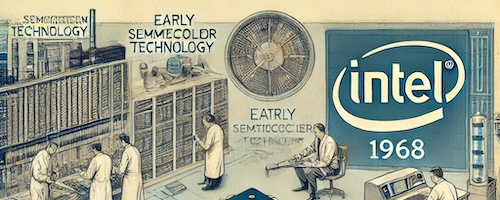
Robert Noyce and Gordon Moore rename the newly formed company NM Electronics to Intel Corporation, laying the foundation for decades of technological innovation.
Founded with a vision for innovation—this set the stage for Intel's long-term sustainability investments.

Intel debuts the 4004, the world's first commercial microprocessor, igniting the microprocessor revolution.
The 4004 helped unlock energy-efficient computing approaches and set product design patterns for decades.

Launch of the 8086 processor, establishing the x86 architecture that drives countless PCs and servers in the modern era.
The architecture's longevity enabled platform optimizations that later supported energy efficiency improvements.

Intel introduces the 386 processor with 32-bit architecture, ushering in a new era of performance and multitasking.
This allowed software to become more capable and energy-aware as systems matured.

This year marks Intel's highest annual greenhouse gas emissions for operations. Over subsequent years, Intel invests heavily in abatement, renewables, and efficiency to reverse this trend.
Major investments after this year helped drive long-term sustainability improvements company-wide.

Intel launches RISE (Responsible, Inclusive, Sustainable, Enabling) strategy and 2030 goals for climate action, water stewardship, and waste reduction.
These goals provided measurable milestones to align the company and suppliers on sustainability.

Intel commits to achieve net-zero greenhouse gas emissions (Scope 1 & 2) across global operations by 2040.
This commitment guided investments in clean energy and efficiency projects at scale.
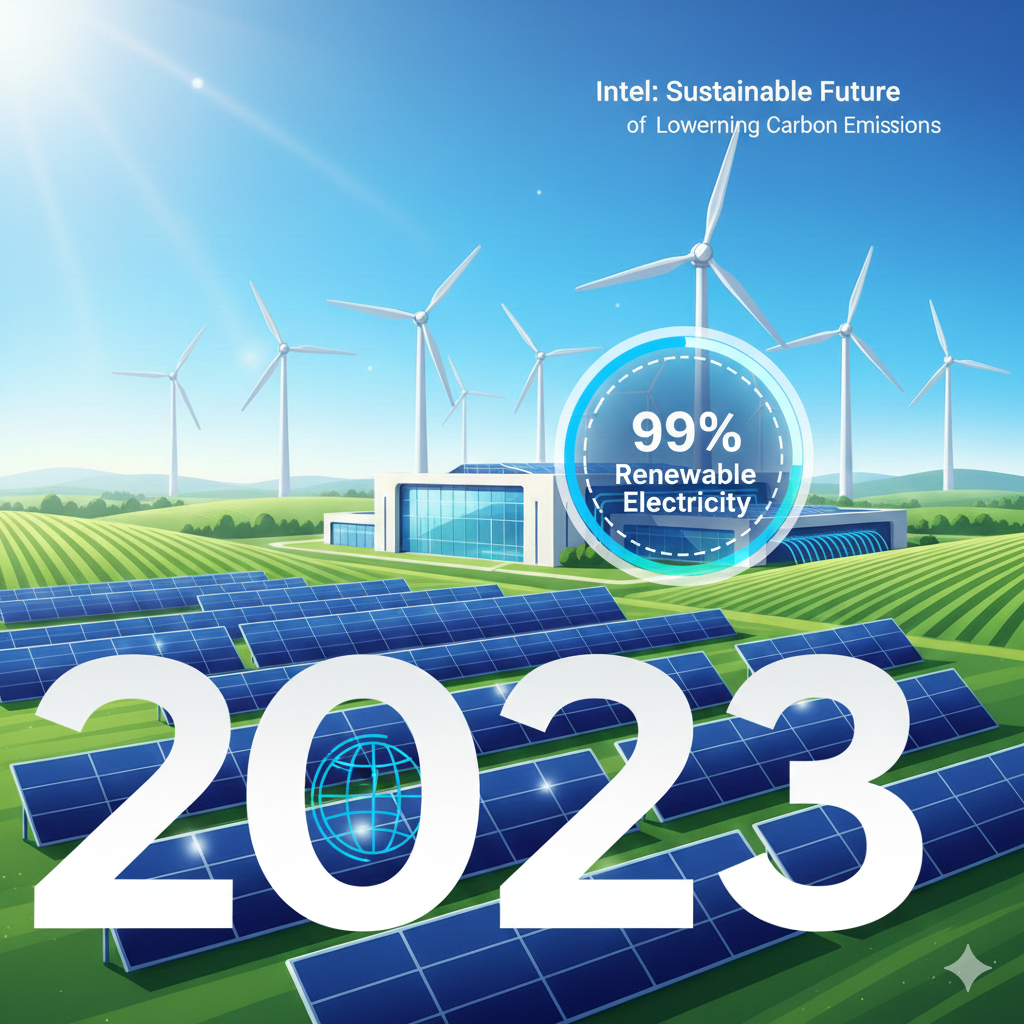
The company achieves 99% renewable electricity usage worldwide, drastically lowering carbon emissions.
Near-complete renewable sourcing is a cornerstone for ongoing emissions reductions.

Intel hosts its first Sustainability Summit, uniting suppliers and leaders to collaborate on sustainable semiconductor manufacturing.
The summit focused on scaling supplier engagement for collective impact.
Under its RISE (Responsible, Inclusive, Sustainable, Enabling) strategy, Intel sets ambitious 2030 goals, including driving industry-wide progress on climate action, water stewardship, and waste reduction.
Learn MoreIn 2022, Intel pledged to achieve net-zero greenhouse gas emissions (Scope 1 and 2) by 2040. This commitment builds on decades of environmental initiatives and partnerships across the semiconductor industry.
Learn MoreIntel conserves billions of gallons of water annually and collaborates with local communities to restore watersheds. Intel also upcycles and recycles materials to reduce waste and advance a circular economy.
Learn More